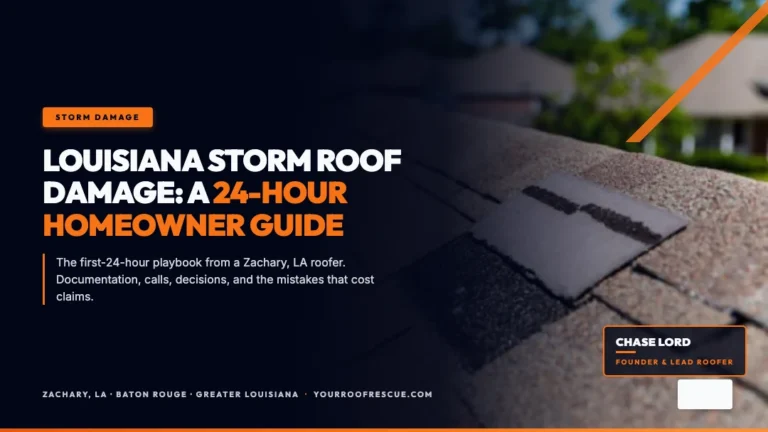
Storm roof damage in Zachary, Louisiana, hits fast. Wind lifts edges. Rain finds the smallest gap. Then you are left staring at stains, drips, and a roof that is not acting like a roof. I approach this like a first responder, because I am one. Calm. Direct. No shortcuts.
Direct Answer: In the first 24 hours after storm roof damage in Zachary, Louisiana, focus on safety, documentation, stopping water intrusion, and starting the insurance process. Delay raises the cost. Bad temporary fixes raise it more.
TLDR: The Rescue Plan
- Stay off the roof and secure the inside first.
- Document everything before repairs.
- Stop active leaks with safe temporary protection.
- Report the claim and schedule a licensed inspection.
Field Note from Zachary
We have inspected roofs in Zachary where the shingles looked fine from the street. Inside, the insulation was saturated, and the decking felt soft, like wet cardboard. Wind-driven rain does not need a missing shingle. It needs one weak seam. Cancer Alley humidity does the rest.
Is it safe to inspect roof damage yourself after a storm?
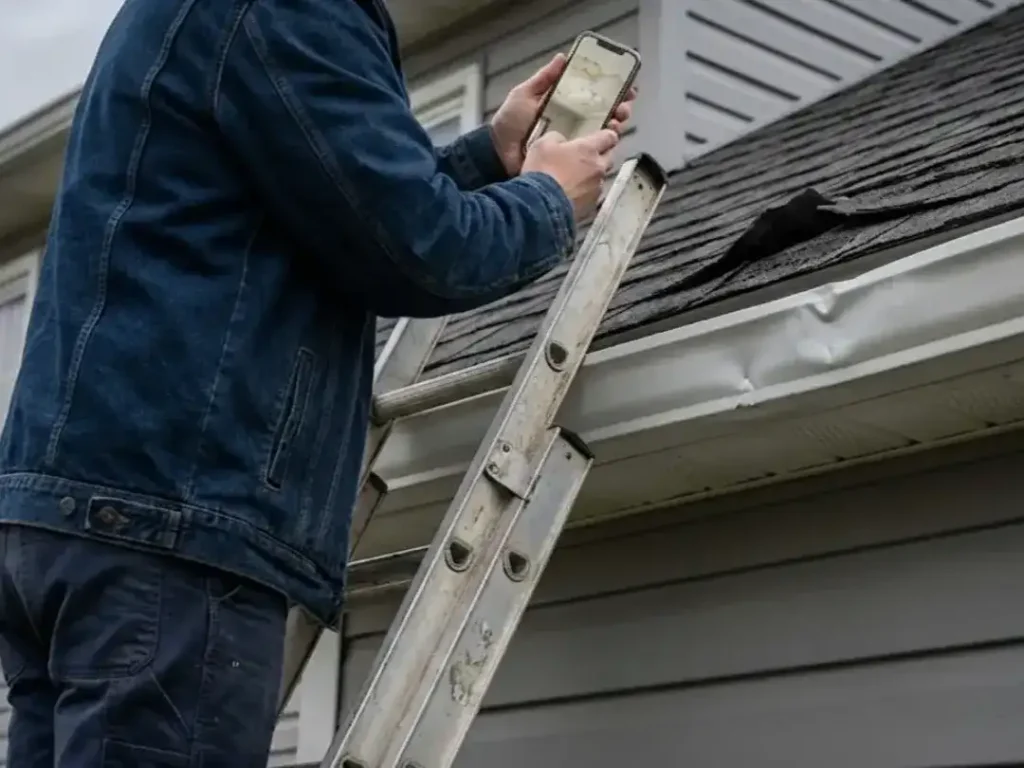
No. Wet decking, loose debris, and hidden weak spots turn a quick look into a fall.
- Do not climb a storm-damaged roof.
- Stay clear of downed lines and exposed wiring.
- If the structure looks compromised, leave and call emergency services.
What damage should you document for insurance in Zachary?
Document everything. Small damage becomes big damage once water gets inside.
- Photos and video from the ground, multiple angles.
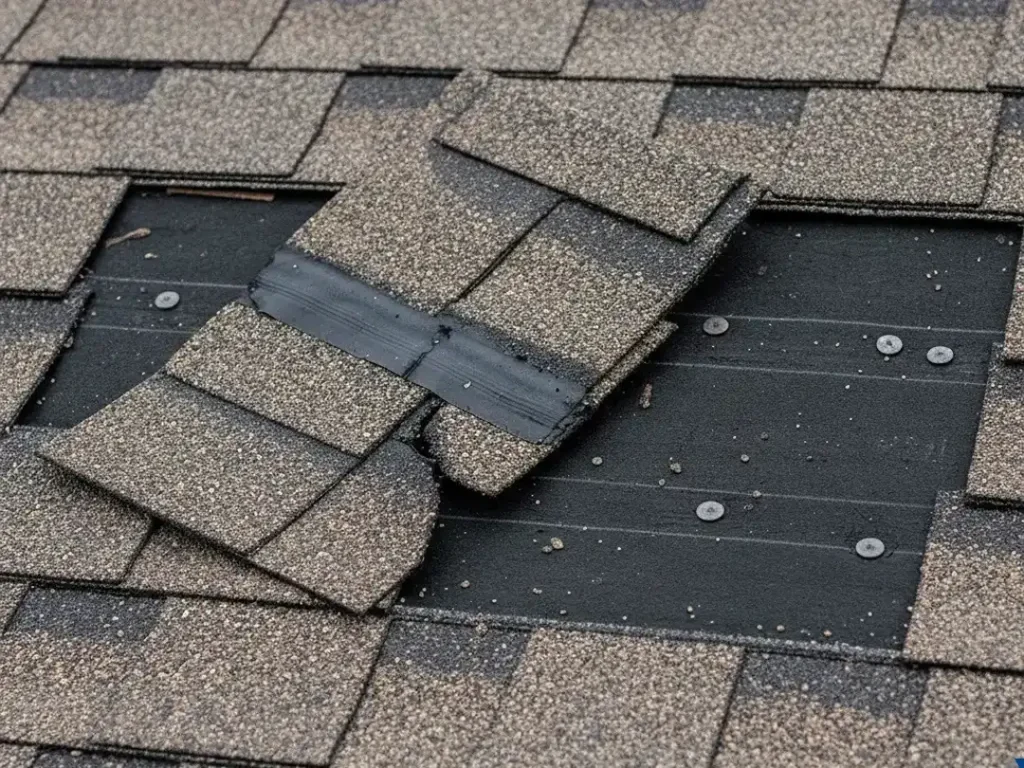
- Lifted shingles, missing tabs, bent metal edges, damaged vents.
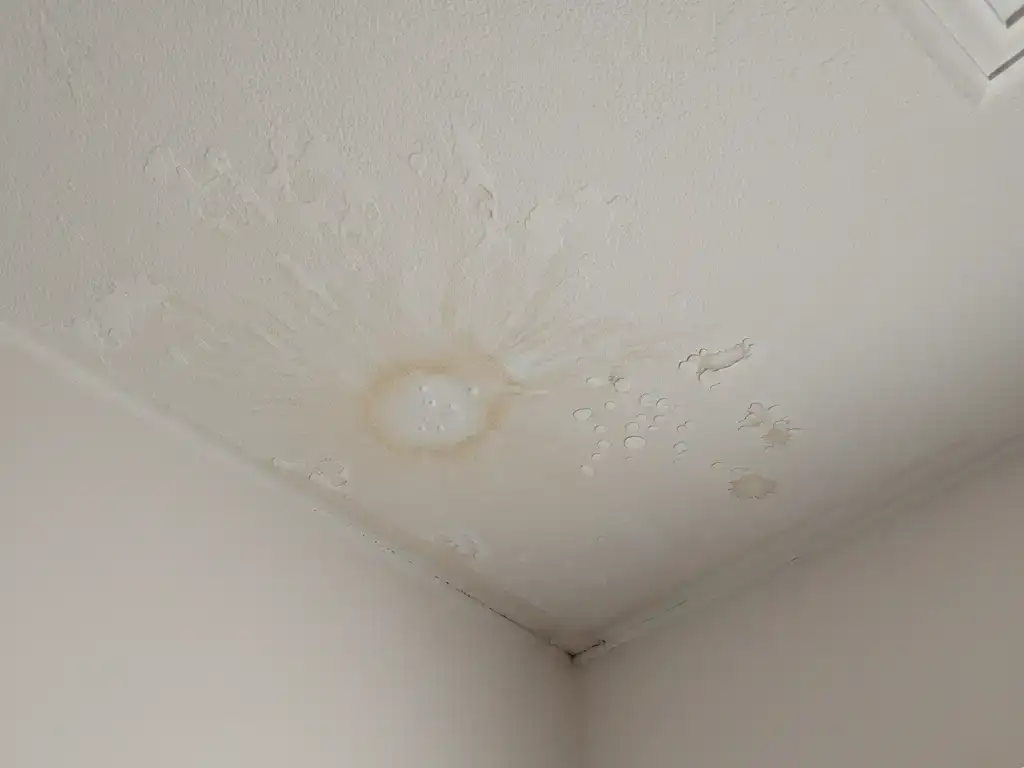
- Water stains, bubbling paint, wet insulation, warped decking.
- Gutter dents, fence damage, and siding impacts from wind debris.
The state also warns homeowners about how deductibles and storm claims work. Read the Louisiana Department of Insurance Hurricane Resource Center. They note named storm and hurricane deductibles commonly run 2 percent to 5 percent of insured value.
Should you tarp your roof after storm damage?
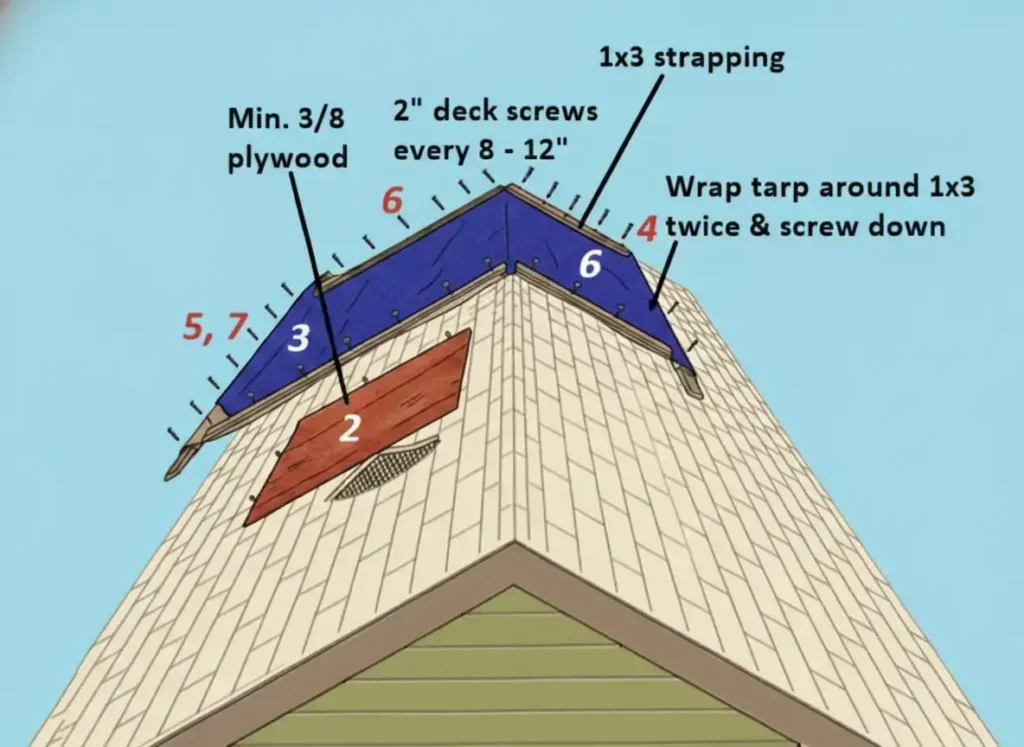
Yes, if it can be done safely and correctly. The goal is to prevent water intrusion, not cause additional damage.
- Use buckets and plastic inside to catch active drips.
- Cover exposed areas with reinforced sheeting and proper fastening.
- If you cannot do it safely, do not do it at all.
For declared disasters, the U.S. Army Corps of Engineers’ Operation Blue Roof provides temporary roof coverings at no cost to eligible homeowners.
How fast should you call your insurance company?
Same day if possible. Open the claim and get the claim number.
- Give the storm date and what you see inside and outside.
- Share your photos and videos.
- Ask what they need for temporary protection and mitigation receipts.
Why a professional inspection matters in Zachary
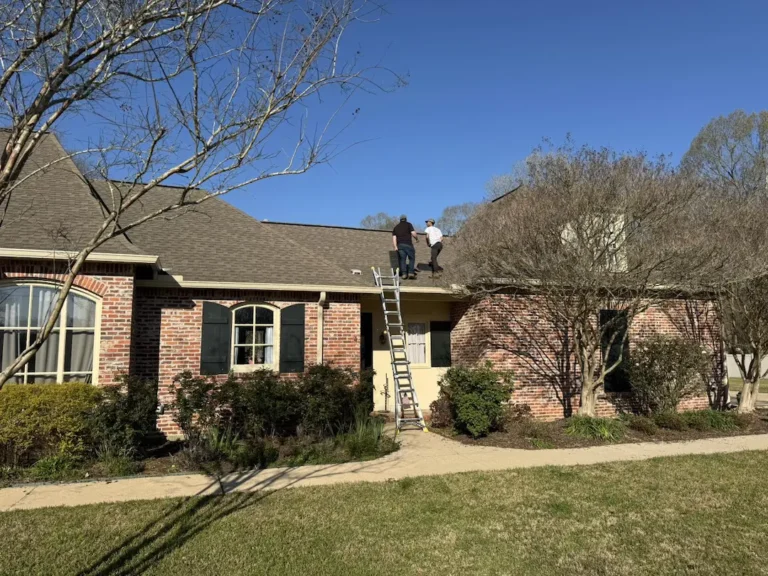
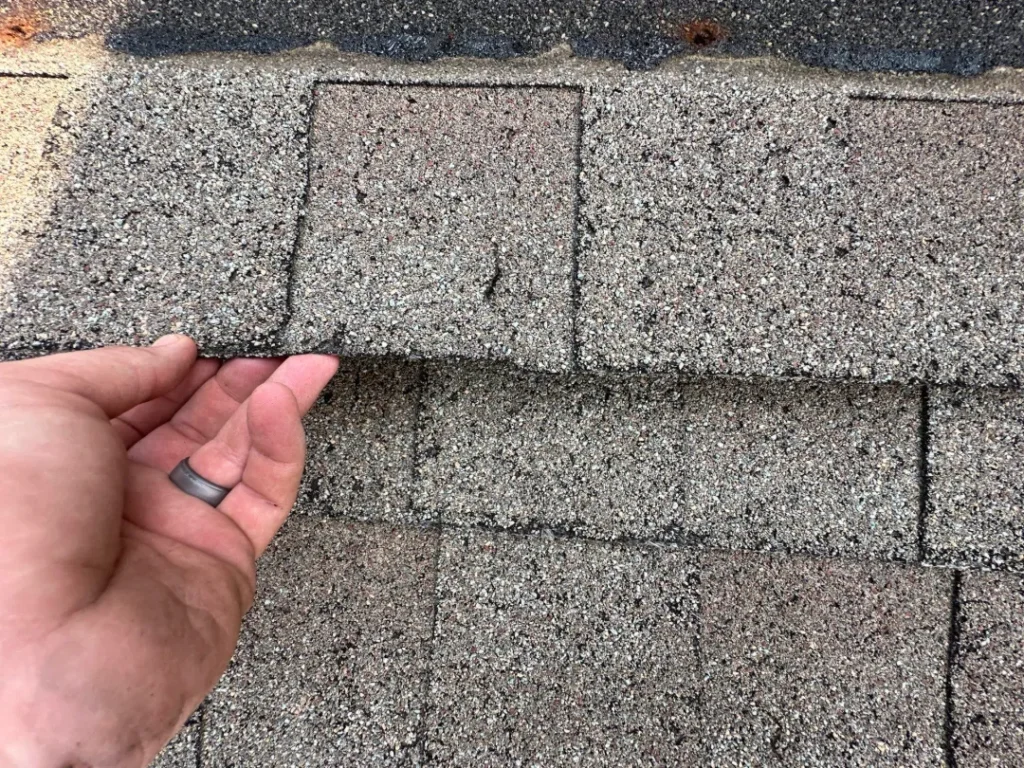
Here is the honest truth. Storm damage hides. A roof can appear normal while the underlying system is compromised. A licensed inspection checks the parts that fail first under Louisiana weather conditions.
What a real inspection should cover:
- Decking condition and soft spots.
- Flashing at valleys, chimneys, walls, and penetrations.
- Drip edge and rake edge attachment.
- Ventilation issues tied to moisture and heat.
If you want storm-hardening standards that actually mean something, read the IBHS FORTIFIED Roof guidance. They describe enhanced deck attachment and note ring shank nails can nearly double roof deck strength in high winds.
Manufacturer rules matter too. GAF spells out wind coverage conditions, including fastener patterns and starter strip requirements, in its GAF roof warranty comparison guide. They list maximum wind-speed coverage figures, including 110 mph without special installation and 130 mph with special installation, for many systems.
Watch Your Step: the common post-storm traps
I see these mistakes every season around Zachary and Baton Rouge. They cause claim delays, extra repairs, and ugly surprises.
- Anyone offering to waive your deductible.
- One-page estimates with no scope and no material list.
- Roofers who never get on the roof then sell you a full replacement anyway.
- Pressure to sign before you understand coverage and deductibles.
Verify credentials. Louisiana lays out contractor registration and licensing rules in the Louisiana State Licensing Board for Contractors FAQ. For home improvement work, they note that registration applies when the total project amount is between $7,500 and $50,000. For commercial work, they note that licensing applies when the total project amount exceeds $ 50,000.
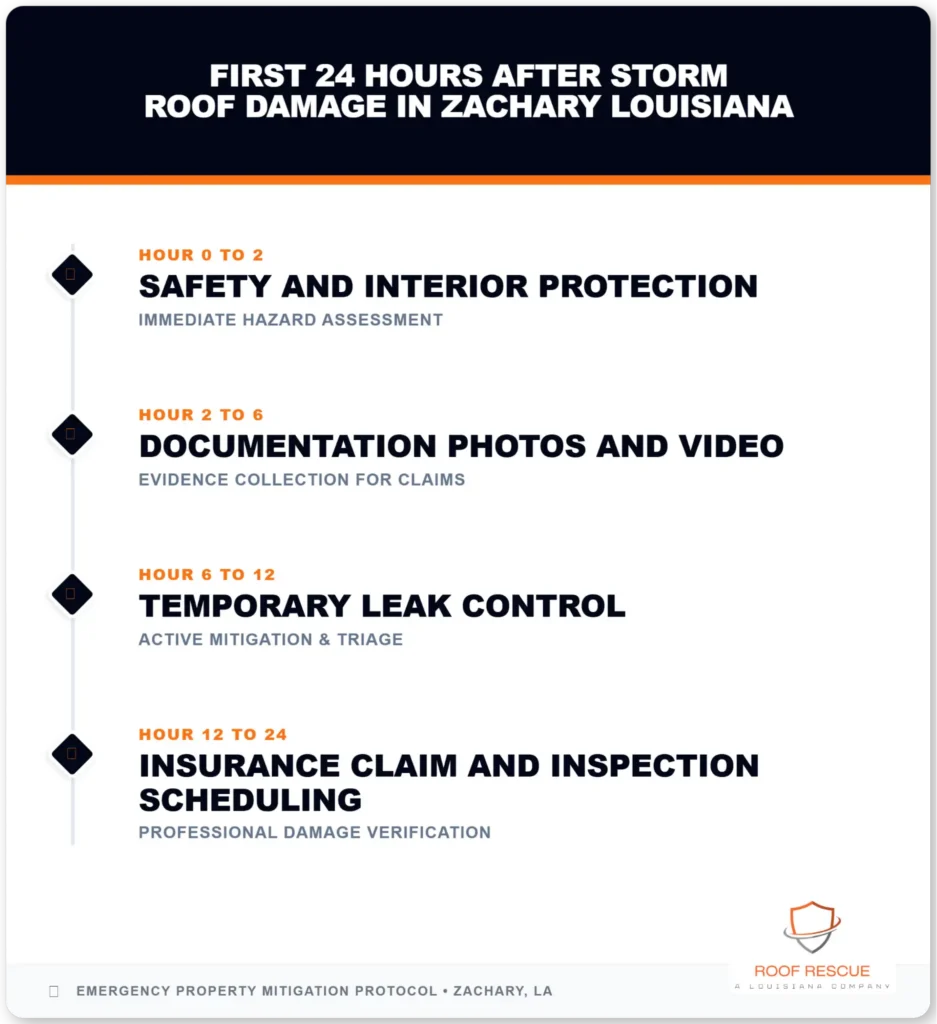
Step-by-step actions for the next 24 hours
- Confirm it is safe to be inside. If not, leave and call for help.
- Move valuables away from wet areas. Put down towels and plastic.
- Photograph all damage before repairs. Outside and inside.
- Stop active leaks with safe temporary protection.
- Call insurance and open a claim. Write down the claim number.
- Schedule a professional inspection and request a written report.
- Save receipts for any mitigation materials and services.
Internal links that matter for Roof Rescue customers
If you are dealing with storm roof damage in Zachary, Louisiana, these pages help you move faster: